Enabling SSL security for your website ensures an encrypted connection between a visitor's website browser and your website. It also has the added bonus of giving your website a boost in Google search results.
How do you know if your site is secure?
Use your browser to visit your website. SSL is enabled if the full website address now starts with https:// instead of http://. You may also see a padlock next to the address.

Why do you need SSL?
Using SSL connections for your site protects information as it is transmitted between your website and your visitors. It assures users that they are visiting the genuine site and that information won't be stolen or changed as it travels between their computers and your website.
To encourage webmasters to protect their sites with SSL security and make the internet more secure overall, Google announced in 2014 that it would give a boost in search results to sites that were protected with SSL security. That marketing bonus was enough for large companies to make the switch very quickly and now small businesses are making the change too. People will see an alarming notice that your website is not secure if you haven't enabled SSL.
A few years ago, it was expensive to purchase the SSL option for your website and many small businesses didn't have the budget to make the change. But in the past couple of years, Squarespace started providing SSL for free. There is no longer any reason to balk at making the switch. I did it for my own websites and then converted all my clients' websites when I saw how easy it was to enable SSL.
How do you enable SSL for your website?
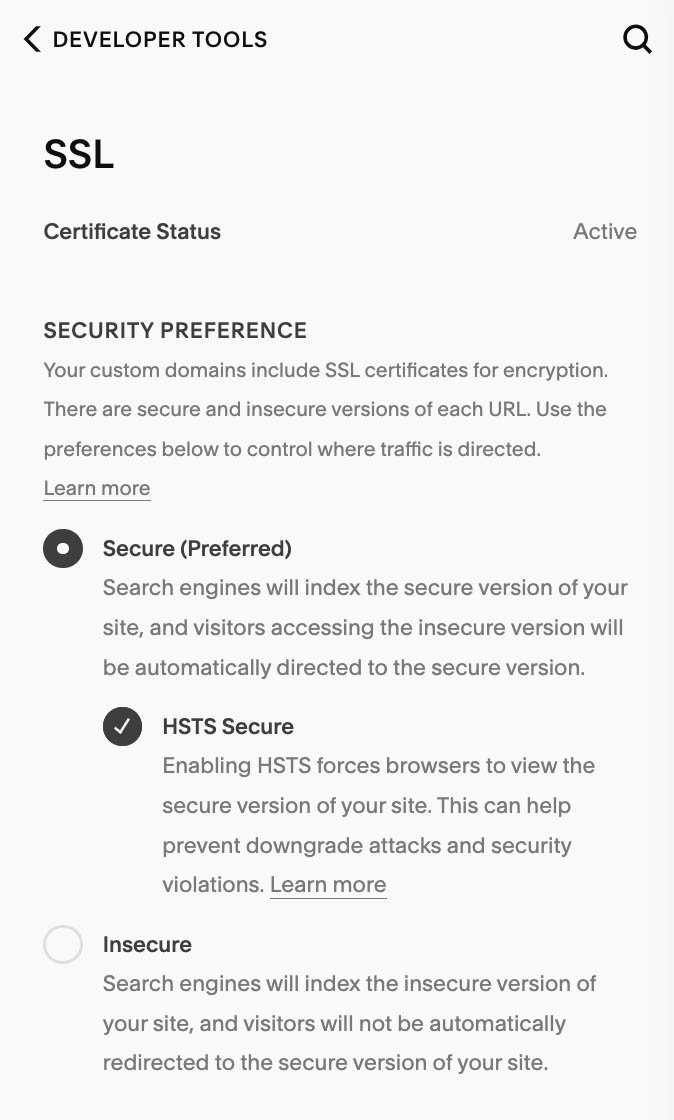
In Squarespace, as of this writing, you'll find the option in Settings - Developer Tools - SSL. Unless you have an older website, the option will probably already be set. I suggest setting both Secure and HSTS Secure to give your visitors the most protection.
Adding search properties to Google
With a Squarespace site enabled with SSL, you can optionally add properties and have Google index all four versions of your site's address, such as:
http://www.mysquarespacesite.com, http://mysquarespacesite.com, https://www.mysquarespacesite.com, and https://mysquarespacesite.com.
You'll find more information in this Squarespace Help document:
[Updated October 2020 to reflect new procedures in Squarespace.]

Writing, styling, and placing headings on a website page takes planning and intention. Use readable headings with just one Heading 1 per page and then Heading 2 and 3 as needed to outline the content.

Whether your website is new or has been around a while, decluttering the content to encourage visitors to browse is always a good idea.

Whether you want to archive a page for posterity or for your future use, here are the instructions for properly archiving the page without causing 404 Page Not Found errors on your Squarespace website.

I recommend starting your business with a Google Workspace Business account so your business email address includes your domain name. But a personal Google account can be useful for many everyday tasks. In this blog post, I cover how the two types of accounts differ.

Images play a role in improving your website's search rankings. Using file names and image properties strategically on your Squarespace website to include possible search words is a good practice for improving the search rankings of your website.

I recommend moving your website presence to Squarespace from older, hard-to-maintain website hosting/building platforms. For this reason, a moved website is a new website on Squarespace for my clients. Learn more in this post about how I work with clients and the different steps involved.

As I worked with clients, I noticed there were six words that came up in questions to me during our consultations: domain, web host, website, page, SEO, and navigation. Becoming familiar with these website components and how they work together helps you manage and maintain a healthy website for your business.

As you start a blog, first determine the focus of your blog. Then choose topics that are relevant and that are in your area of expertise. Blog posts can contain text, images, videos, links to other blog posts, links to podcasts, and personal or creative endeavors. Each blog post adds content to your website and gives you cumulative client-attracting and SEO benefits.

Before you can choose individual topics to write about in your blog, first define the strategy for your blog as a whole. Knowing who your audience is and what they want to know will be the foundation for the content. It will also help you choose topics that fit the goals of your blog.

Adding a blog to your website and keeping it updated is a great way to publicize your business. Search engines like Google reward websites that produce fresh content. Employing SEO best practices to add keywords to your blog posts increases the likelihood that potential customers will find you in online searches.

If you have a website that will show personal photos, you’ll want to remove location information from those photos, especially from any photos taken at your home or other places that you don’t want to share with the public.

Follow these three rules when choosing and preparing your website images to have a professional-looking website.

Enabling SSL security for your website ensures an encrypted connection between a visitor's website browser and your website. It also has the added bonus of giving you a boost in Google search results.

The steps for redesigning a website are similar to creating a new website. You can save a little time re-using some text and images, but you’ll also write new text, add new images, and possibly change the navigation.

A blog has many benefits for increasing traffic to your website and improving SEO. But if you don’t love writing, there are alternatives.